
The Root Beneath Many Diseases
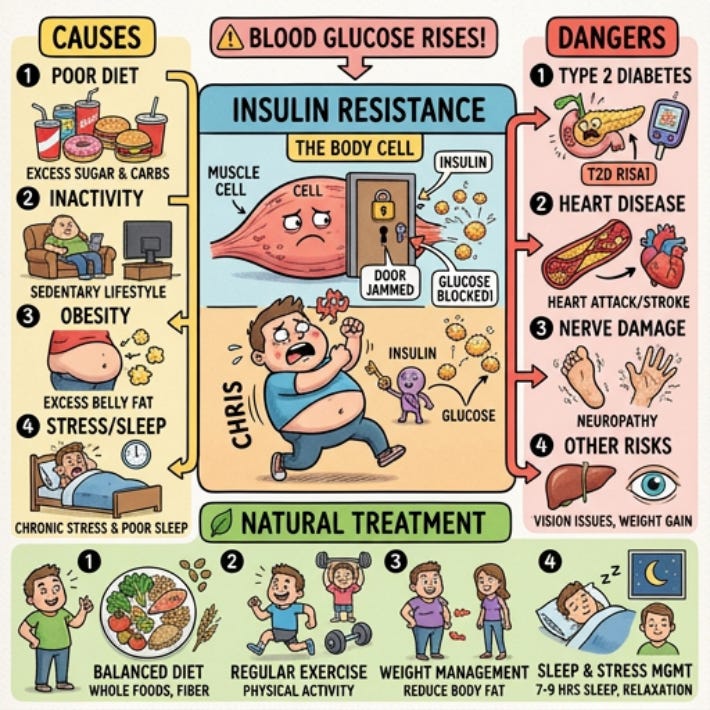
Insulin resistance is the most common metabolic problem in America, and most people who have it don’t know it. It can quietly run for 10 to 15 years before a blood sugar test ever turns abnormal.
In Why We Get Sick (2020), Dr. Benjamin Bikman, a metabolic scientist at Brigham Young University, makes a case I see play out in the exam room every week: insulin resistance isn’t just a diabetes problem. It sits underneath heart disease, fatty liver, PCOS, dementia, gout, and much more. If we catch it early and treat the root, many of those downstream problems can be prevented or improved.
This article covers what insulin resistance is, why it happens, what it leads to, and how we treat it, from lifestyle to supplements to prescription medications.
What insulin resistance is
Insulin resistance means your cells no longer respond well to insulin, so your pancreas has to make more and more of it to do the same job.
Insulin is the hormone that moves sugar out of the blood and into muscle, liver, and fat cells. It is also your body’s main “storage” signal: while insulin is high, the body stores fat and shuts off fat burning.
When cells become resistant, the pancreas compensates by pumping out extra insulin. This is called hyperinsulinemia, and it is the key point Bikman emphasizes. For years, the extra insulin keeps blood sugar normal, so a standard glucose or A1c test looks fine. But the high insulin itself is doing damage the whole time.
The progression usually looks like this:
- Hidden stage: high fasting insulin, normal glucose and A1c
- Prediabetes: fasting glucose 100–125 mg/dL or A1c 5.7–6.4%
- Type 2 diabetes: the pancreas can no longer keep up; fasting glucose 126+ or A1c 6.5%+
That is why measuring insulin, not just glucose, matters so much. More on testing at the end.
What causes it
The single biggest driver is chronically high insulin itself: the more often and the higher insulin runs, the more the cells turn down their response. Bikman groups the causes into a few buckets, and they reinforce each other.
- Diet high in refined carbohydrates and sugar. Frequent spikes of glucose mean frequent spikes of insulin. Constant snacking keeps insulin elevated all day with no break.
- Excess visceral and liver fat. Fat packed around the organs and inside the liver releases inflammatory signals and free fatty acids that directly interfere with insulin signaling.
- Inactivity and low muscle mass. Muscle is the largest “sink” for glucose. Less muscle and less movement means less place for sugar to go.
- Chronic stress. Cortisol raises blood sugar and opposes insulin. Long-term stress keeps that system switched on.
- Poor sleep. Even a few nights of short sleep measurably reduces insulin sensitivity. Untreated sleep apnea is a major, often missed contributor.
- Chronic inflammation. Inflammatory molecules such as TNF-alpha and IL-6 block the insulin receptor pathway, whatever their source (gut, gums, infection, autoimmunity).
- Certain medications. Steroids, some antipsychotics, thiazide diuretics, some beta-blockers, and statins can worsen insulin sensitivity.
- Genetics, age, and hormones. Family history, South Asian, Hispanic, Black, and Native American ancestry, menopause, low testosterone in men, and PCOS all raise risk.
The common thread: the body has been asked to store energy far more often than it has been asked to use it.
What it can lead to
Because nearly every tissue has insulin receptors, insulin resistance shows up in almost every organ system. This is the heart of Bikman’s argument: many “separate” chronic diseases share this one root.
- Metabolic: prediabetes, type 2 diabetes, weight gain (especially around the middle), and difficulty losing weight
- Heart and blood vessels: high blood pressure, high triglycerides, low HDL, small dense LDL particles, atherosclerosis, heart attack, and stroke
- Liver: fatty liver disease (MASLD), which can progress to inflammation (MASH), scarring, and cirrhosis
- Brain: higher risk of cognitive decline and Alzheimer’s disease; some researchers call Alzheimer’s “type 3 diabetes”
- Hormones and fertility: PCOS, irregular cycles, and infertility in women; low testosterone and erectile dysfunction in men
- Kidneys: chronic kidney disease, uric acid buildup, and gout
- Cancer: higher risk of several cancers, including breast, colon, endometrial, and pancreatic, since insulin is a growth signal
- Other: skin tags, darkened skin at the neck or armpits (acanthosis nigricans), sleep apnea, fatigue after meals, and some forms of hearing loss and migraine
The hopeful flip side: because these conditions share a root, improving insulin sensitivity often improves several of them at once.
Natural ways to approach it
Lifestyle is the foundation of treatment, and the goal is simple: lower insulin and give the body more chances to use stored energy. In the landmark Diabetes Prevention Program, lifestyle change cut progression from prediabetes to diabetes by 58%, outperforming metformin (31%).
Eat to control insulin
- Cut refined carbohydrates, sugar, sweetened drinks, and ultra-processed foods first. This is the highest-yield change.
- Build meals around protein, non-starchy vegetables, and natural fats. Protein and fat blunt the insulin response to a meal.
- Lower-carbohydrate and ketogenic eating patterns work well for many patients, especially those with diabetes or fatty liver. A Mediterranean pattern is a good alternative for those who prefer it.
- Eat carbohydrates last in the meal, after vegetables and protein. This simple sequencing lowers the glucose spike.
- Stop grazing. Fewer eating occasions give insulin time to come down between meals.
Give insulin a break
- Time-restricted eating (for example, eating within an 8–10 hour window) lowers average insulin levels. Start gently and work up.
- Patients on insulin or sulfonylureas need medical supervision before fasting, because of hypoglycemia risk.
Move, and build muscle
- Resistance training 2–3 times a week builds the muscle that soaks up glucose. This is the most underused tool.
- A 10–15 minute walk after meals noticeably lowers the post-meal glucose rise.
- Aim for about 150 minutes of moderate activity per week. Any movement beats none.
Sleep, stress, and the rest
- Protect 7–9 hours of sleep, and get evaluated for sleep apnea if you snore or wake unrefreshed.
- Manage stress with whatever works: prayer, breathing exercises, time outdoors, counseling.
- Limit alcohol, stop smoking, and get morning sunlight to anchor your body clock.
- Losing just 5–10% of body weight markedly improves insulin sensitivity and liver fat.
Supplements that can help
Supplements support lifestyle change; they don’t replace it. The ones below have the best human evidence. Typical adult doses are listed, but check with your provider first, especially if you take diabetes medication, since several of these lower blood sugar.
Supplement
Typical dose
How it helps
Evidence and cautions
Berberine
500 mg 2–3 times daily with meals
Activates AMPK, similar to metformin; lowers glucose, A1c, and triglycerides
Strongest evidence of any supplement. GI upset common. Interacts with many drugs (CYP3A4); avoid in pregnancy
Myo-inositol (+/- D-chiro-inositol)
2–4 g daily (40:1 ratio if combined)
Acts as an insulin “second messenger”
Good evidence in PCOS and gestational diabetes; very well tolerated
Magnesium (glycinate or citrate)
200–400 mg daily
Needed for insulin receptor signaling
Low magnesium is common in insulin resistance; correcting it improves sensitivity. Use caution with kidney disease
Omega-3 fish oil (EPA/DHA)
1–3 g daily
Lowers triglycerides and inflammation
Modest direct effect on glucose; strong benefit for triglycerides. Slight bleeding risk with blood thinners
Vitamin D3 (with K2)
Dose to a blood level of 40–60 ng/mL
Supports insulin secretion and sensitivity
Most helpful when levels are low. Test before and during
Alpha-lipoic acid
300–600 mg daily
Antioxidant; improves glucose uptake
Also helps diabetic nerve pain. Can lower glucose
Chromium picolinate
200–1,000 mcg daily
Enhances insulin receptor action
Mixed results; most benefit in those who are deficient
Ceylon cinnamon
1–3 g daily
Mild insulin-mimicking effect
Small benefit. Use Ceylon, not cassia, to avoid liver toxicity from coumarin
Soluble fiber (psyllium)
5–10 g before meals
Slows carbohydrate absorption
Lowers post-meal glucose and LDL. Take apart from other medications
Apple cider vinegar
1–2 tbsp in water before meals
Blunts the glucose spike after a meal
Dilute it and use a straw to protect tooth enamel
A common starting point is berberine or inositol plus magnesium, adding others based on labs and the individual picture.
The conventional medical approach
Conventional medicine usually treats insulin resistance once it shows up as prediabetes or diabetes, with medications that lower glucose or body weight. Used well, these drugs are powerful tools, especially alongside the lifestyle foundation above.
Metformin is the traditional first-line drug and has been used for more than 60 years.
- Reduces the liver’s glucose output and modestly improves insulin sensitivity
- Inexpensive, weight-neutral or mildly weight-reducing, and well studied
- Side effects: GI upset (the extended-release form is gentler), and vitamin B12 deficiency over time, so B12 should be checked yearly
GLP-1 receptor agonists have transformed the field. They mimic a gut hormone that boosts insulin release only when glucose is high, slows stomach emptying, and quiets appetite and “food noise” in the brain.
Drug
Brand names
Form
Semaglutide
Ozempic (diabetes), Wegovy (weight)
Weekly injection
Semaglutide
Rybelsus (diabetes), Wegovy pill (weight, approved Dec 2025)
Daily tablet
Tirzepatide (GLP-1 + GIP)
Mounjaro (diabetes), Zepbound (weight)
Weekly injection
Foundayo (weight, approved April 2026)
Daily tablet, no food restrictions
Liraglutide
Victoza, Saxenda
Daily injection
- Typical weight loss is about 15% with semaglutide and about 20% with tirzepatide, with large drops in A1c
- Semaglutide reduces heart attack and stroke risk, and GLP-1s show benefit in fatty liver, kidney disease, and sleep apnea
- Side effects: nausea, constipation, reflux; rarely pancreatitis or gallbladder problems. Not for those with a personal or family history of medullary thyroid cancer or MEN2
- The big caution: up to a third of the weight lost can be muscle. Adequate protein and resistance training are essential while on these drugs
- Weight usually returns when the drug is stopped abruptly, so a planned taper paired with lifestyle change is the better approach
Other medications used in insulin resistance and diabetes:
- Pioglitazone: a true insulin sensitizer that also helps fatty liver; can cause fluid retention and weight gain
- SGLT2 inhibitors (empagliflozin, dapagliflozin): cause glucose to be excreted in urine; protect the heart and kidneys
- Insulin and sulfonylureas: lower glucose but raise insulin levels, which, from Bikman’s perspective, can worsen the underlying problem; best reserved for when they’re truly needed
The weakness of the conventional approach isn’t the drugs themselves. It’s that treatment often starts only after glucose rises, years after insulin resistance began, and without enough emphasis on the root causes.
Testing and the bottom line
Ask for a fasting insulin, not just a glucose and A1c. It is the earliest and cheapest way to catch insulin resistance.
Test
Optimal range
Suggests insulin resistance
Fasting insulin
Under 8 uIU/mL
Above 10 uIU/mL
HOMA-IR (glucose x insulin / 405)
Under 1.5
Above 2.0
Triglyceride-to-HDL ratio
Under 1.5
Above 3.0
Fasting glucose
70–90 mg/dL
100 mg/dL or higher
Hemoglobin A1c
Under 5.4%
5.7% or higher
Waist circumference
Under half your height
Over half your height
The bottom line: insulin resistance is common, silent, and at the root of many of the chronic diseases we fear most. The good news is that it is also highly reversible. Start with food, movement, sleep, and stress. Add targeted supplements where they fit. Use medications like metformin and the GLP-1s as powerful tools when needed, not as a substitute for addressing the cause.
This article is for education and is not a substitute for individual medical advice. Talk with your provider before starting supplements or changing medications.
Sources and further reading
- Bikman, B. Why We Get Sick. BenBella Books, 2020
- Novo Nordisk: Wegovy pill FDA approval
- New GLP-1 drugs 2026: Foundayo (orforglipron) approval